POP and GLAM ROCK
History of Pop
The History of Pop and Glam Rock will be explained in other pages. I will analyse both genres (mix of both of them) in pages dedicated to decades. It will help to gain a deeper understanding of both genres if will analyse a few music videos.
POP
The genre of pop music genre came about in the 1950s, where, at the time, rock and roll was the most popular music. However, today a lot of of the popular music is dance music and rapping. Also, a lot of pop music videos in today’s world contain performative routines, vibrant colours and have special effects edited on to them.
Many artists use their costume to symbolise something whether it is expensive cars to show wealth or revealing clothing to show sexuality.
Dance routines are used frequently in pop music videos by artists such as Justin Bieber or Little Mix. This is to give the audience a feeling of what the artist they are listening to is like.
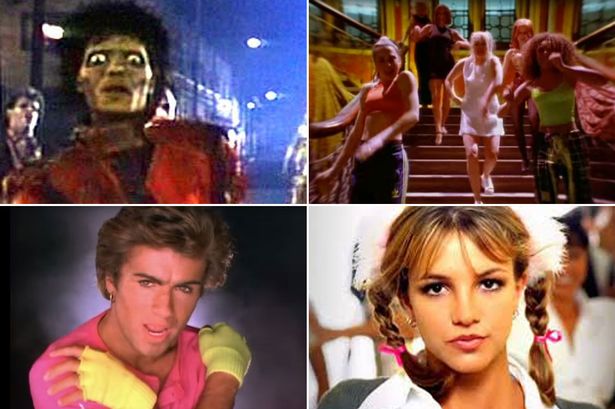
Main CODES & CONVENTIONS of Pop Music (videos)
Technically Techniques
- the way camera angles are used
- different types of shots and movements
- diegetic vs. non – diegetic sound
- the pace and style of editing
- the accent on the genre (POP)
Symbolic Techniques
- facial expressions
- gestures
- poses
- mis en scene
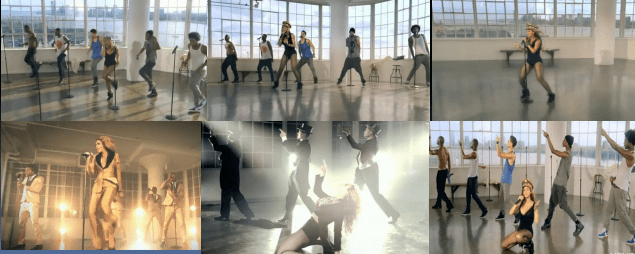
- Perfomance
Performances videos mainly focuses on the artists or band just plainly performing wither on their own or in the front of a crowd. There is no storyline, just a collection of camera angles and movements of the band members. This is popular amongst rock artists videos and are often seen in pop style music videos.
2. Narrative
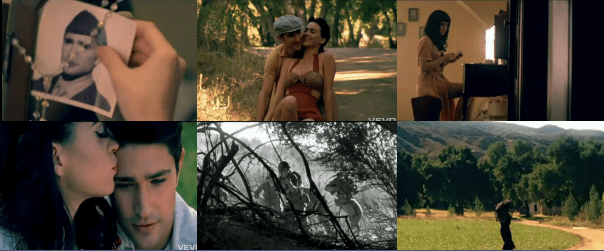
A narrative music video follows a storyline. There are two types of narrative: linear and fragmented. A linear narrative follows the standard storyline structure. beginning, middle, end. A fragmented narrative is one that doesn’t but depicts the lyrics from the song.
Pop music video’s narratives often revolve around love or a party lifestyle. This is because many of the artists target audience are teenagers who are associated with both love and partying. This means that the artist’s target audience will want their music videos.
3. Mixture
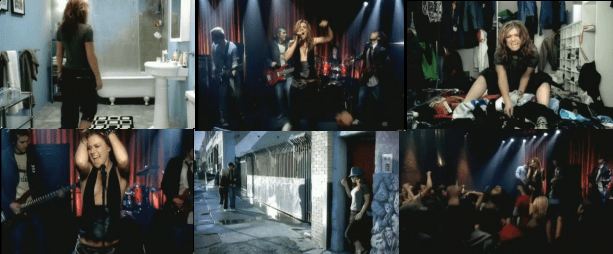
Mixture – is a combination of performance and narrative. The artists is features in this style of music video with the narrative of the story acting as the “B-roll”.
4. Animated
These videos use fast movement showing a series of pictures and frames. They can be done digitally or manually using props.
5. Cameo
This is the style of music video when other artist or famous people appear but don’t perform in the video. This still involves the artist usually singing through the video with cut backs to them performing whilst almost doing a narrative video.
- Camera Techniques
Music video features a number of shots for various reasons; to relate with the audience by expressing thoughts and feelings, but also to show the viewer what is happening. Camera shots that would be found in a music video are:
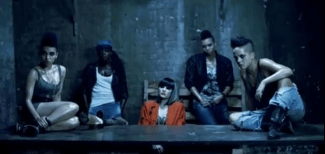
- long shot – the emphasis on this type of shot is the location. The artist is shown but cannot be clearly seen.
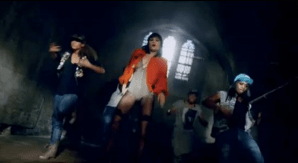
- wide shot – this is when the artists is shows taking up most of the shot but the location / setting is still focused on.
- middle shot – this shows the artists from his / her waist to head, and focuses mainly on the subject but still giving an impression of the location / setting.
- medium close up – this shot is half way between middle shot and a close up shot, showing the artists form chest to head.
- close up – this shot shows the artists face or can show an object that the artists is holding, or something where the camera focuses closely on.
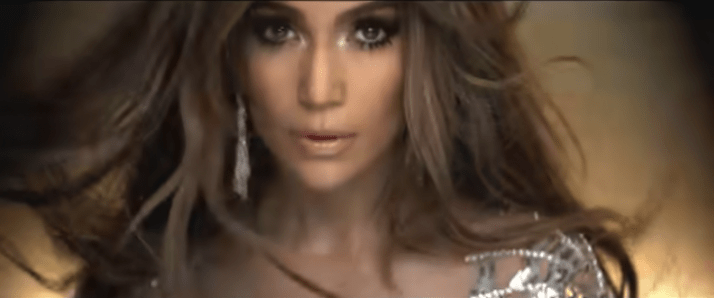



They are used in order to display to the viewer the feelings and emotions the artist / character is feeling.
- extreme close up – this shows the artists face extremely close, for example eyes, or mouth to identify something it have the effect of showing the audience the artist thoughts and feelings or even showing a lip sync commonly used in music videos.
- over the shoulder shot -this is a good shot used, specifically in narrative based music videos, when the artists is acting and speaking to another person, when the artist is acting and speaking to another person. This shot is also used to show something the character is looking at.
- cut in – this shot can be used in music videos to show something that the lyrics might be referring to. A cut in is also used to show a transition of time.
Camera shots can also be used to highlight what an artist is known for. For example, the style, image or the dance moves.
2. Camera Angles
The way the camera is positioned determines the angle of shot. There are many different camera angles used in the production of music videos to convey different images.
- eye level – this is very common view as this is how we view the world. It shows subject as we would expect to see them in real life.
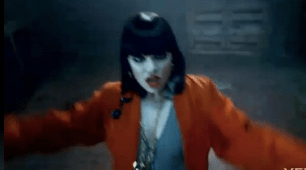
- High Angles – this is where the camera shows the subject form above – the camera is angled down towards the subject – which has the effect of making them appears less powerful, less significant and or even submissive.
- low angle – this is where the subject is shown from below, giving the impression of being more powerful or dominant.
- bird’s eye – this angle is showing the subject / scene form directly above. It is completely different and can be from an unnatural point of view which can be used to add a dramatic effect or showing a different spatial perspective. It can also show the position and motions of different characters and objects, enabling the viewer to see things the character might not see.
3. Editing
Depending on the tempo of the music being at a slow or fast pace.
4. Mise en scene
Often in modern music pop music videos the artists / characters change there costumes throughout the music video in order to keep the interest of the viewer. Often in pop music videos bright and colourful clothing is worn or clothing is worn which fits the narrative. The lighting in pop music videos is often bright and full of colours to create a positive feel amongst the audience. However, this may differ due to narrative or genre of music such as rock, as in pop rock music videos and lighting may not be as bright and vibrant as rock is associated with darker and duller lighting.
Many pop music videos use well known locations such as London, New York or other cities. This is because many of the artists’ target audience will recognise these places for the atmosphere and party life. Places such as schools, gyms, parks, etc. Are also often used so that the audience can feel closer to their favourite artist.
5. Representation of women and men in music videos.
Females as a solo artist or in a all-group band are objectified as a sexual object. This is because they usually wear little / revealing clothing or tight fitting in order to catch the gaze of men and to keep the attention of their target audience.
Male solo artists are rarely objectified a as sexual objects in music videos. There are often female dancers in the background of their music videos or dancing with the male artist. Here again it is the females that are objectified as a sexual object.
6. Voyeurism
Voyeurism is most used in pop music videos, where woman are shown in a sexual nature throughout the video. Now a days this is used by both male and female artists in different ways. One way in which voyeurism is used in music videos is to attract people, usually if the music video is aimed at girls people will add voyeurism in to attract a male audience. One example of this is Despacito, in this music video the main artists are male which can appeal to the female audience and throughout a lot of girls wearing short/tight clothes are also featured to attract the male audience. Another way in which voyeurism can be used is to tell a story, for example in Beyoncé’s if I were a boy there are scenes where herself and another featured female part were wearing revealing clothing or hardly any however this was not used in order to attract people to her video it was used to show the story of her betrayal and also the vulnerability of her character. A final way voyeurism can be used is in order to show freedom and individualism of an artist, an example of this is Miley Cyrus’s wrecking ball where she isn’t wearing many clothes however it represents her freedom and again vulnerability.
Main CODES & CONVENTIONS of GLAM ROCK (videos)
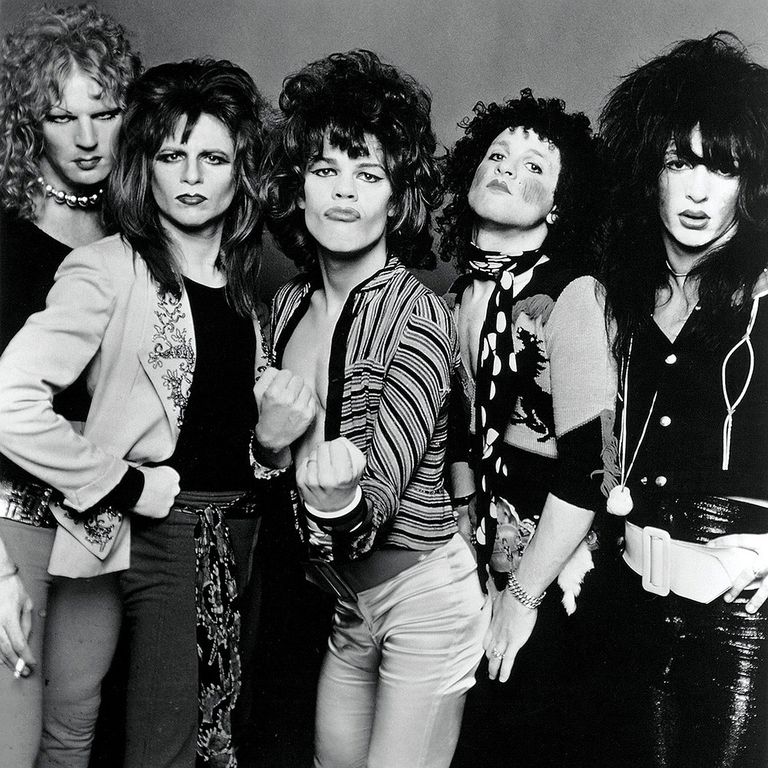
Often confused with 80’s hair metal, glam rock was an almost entirely British phenomenon that became widely popular during the first half of the 70’s. Glam Rock was fairly simply, crunchy guitar rock put across with outrageous theatrically. Most of the music was unabashedly catchy, with melodies drawn from teenage bubblegum pop and hip – shaking rhythms form early rock & roll. But those innocent – sounding influences were belied by the delivery, which was all campy, glitzy showmanship and sexuality. In fact, one of the main reasons glam never caught on in the U.S. was the glam artists intentionally played around with gender conventions, dressing themselves up in outlandish, androgynous costumes and make up. In general, glam rock fell into two schools.
Codes and Conventions of Glam Rock and Pop are very similar. Glam rock can be seen as a fashion as well as musical subgenre. Glam artists rejected the revolutionary rhetoric of the late 1960s rock scene, instead glorifying decadence, superficiality, and the simple structures of earlier pop music.Codes and Conventions of Glam Rock and Pop are very similar.
Artists drew on such musical influences as bubblegum pop, the brash guitar riffs of hard rock, stomping rhythms, and 1950s rock and roll, filtering them through the recording innovations of the late 1960s.
Visually it was a mesh of various styles, ranging from 1930s Hollywood glamour, through 1950s pin-up sex appeal, pre-war cabaret theatrics, Victorian literary and symbolist styles, science fiction, to ancient and occult mysticism and mythology; manifesting itself in outrageous clothes, makeup, hairstyles, and platform-soled boots. Glam is most noted for its sexual and gender ambiguity and representations of androgyny, beside extensive use of theatrics.
One of the main codes and conventions of glam rock is close up shots. Usually audience would see numerous close up shots of the singer or the band. That would represent their image and would attract more audience.
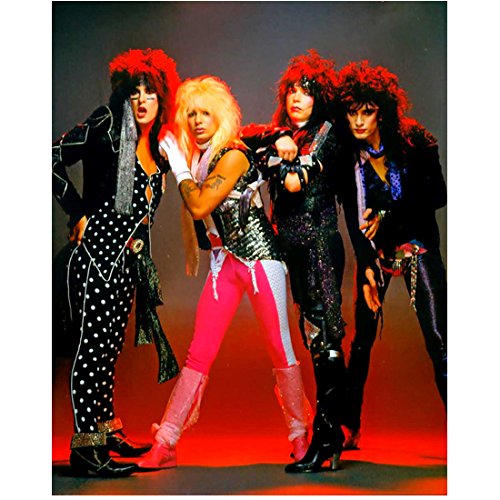
 Elton John Best hits